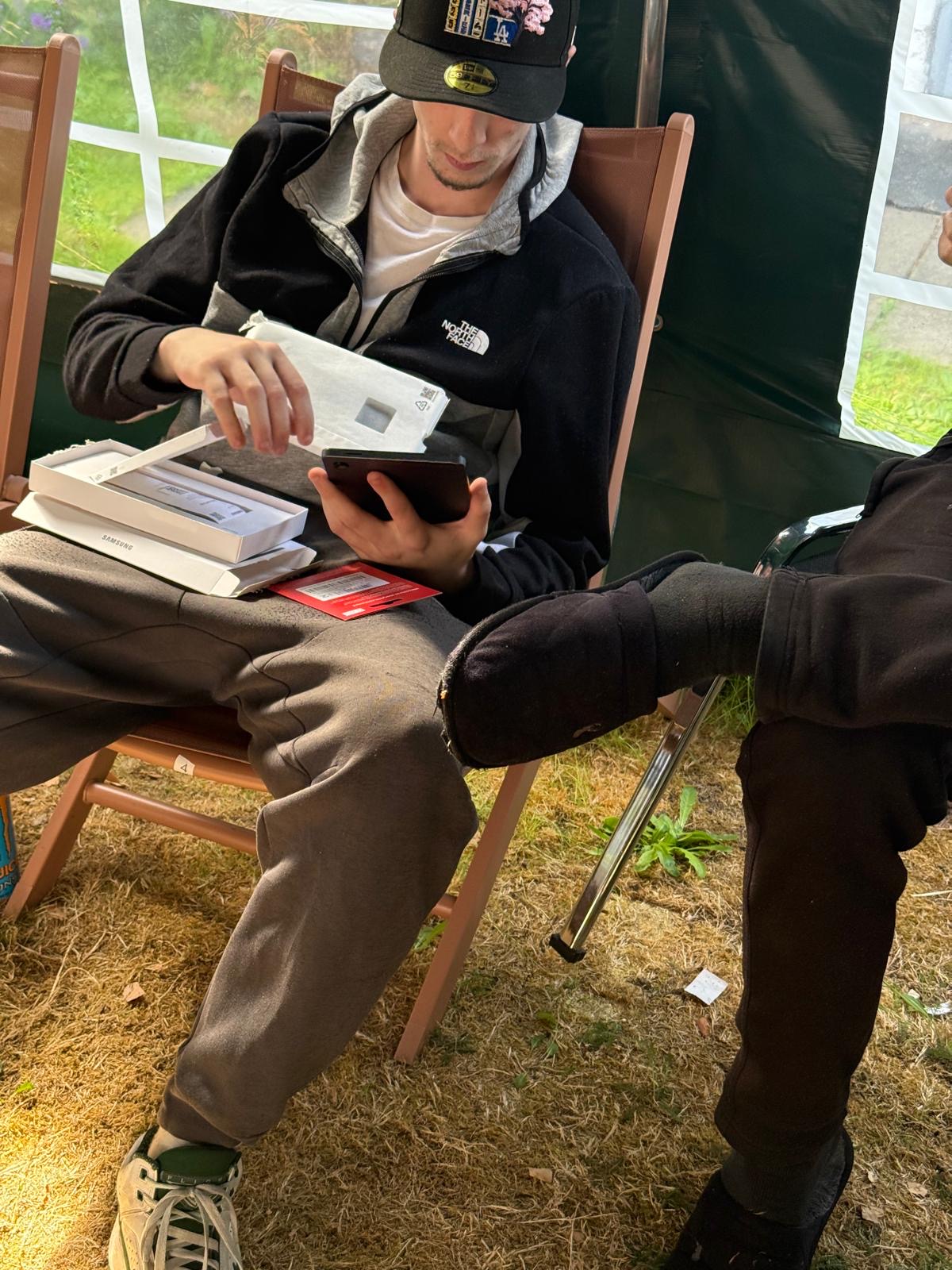
We delivered 30 tablets. We met 30 futures.
Thirty young people. Thirty different journeys. And a room full of ambition that reminded us why digital inclusion is still so important.
Ask where they want to go.
I was in a room with a lawyer, a carpenter, a painter and decorator, a business owner, a hairdresser and a psychologist.
Except they weren't any of those things. Not yet.
They were young people living in supported accommodation with St Basils, each with a different journey, different challenges and very different hopes for the future.
There was energy, humour, friendship and ambition. At a time when we hear so much about youth unemployment, worklessness and young people who are NEET, the day raised a much more useful question.
Are we spending enough time asking young people what they want to become — and then helping remove the barriers in their way?
Plus practical online-safety support and time to talk about the digital experiences that affect everyday life.
Another barrier they don't need.
For many of us, being online has become almost invisible. We don't think twice about opening an email, updating a CV, searching for a job, watching a tutorial or joining an online interview.
But remove the device or the connectivity and opportunity becomes harder to reach.
For a young person already navigating significant challenges, why should digital exclusion become another barrier to ambition?
Can You Hear Me?
We played our Can You Hear Me? song to some of the young people. Its message suddenly felt particularly relevant.
Can you hear what I'm trying to achieve?
Can you hear what's getting in my way?
Digital inclusion isn't simply handing someone a device and deciding they're now included. Sometimes it starts by listening.
Watch / listen to Can You Hear Me?Then something unexpected happened.
When we started talking about scams and staying safe online, staff began sharing their own experiences of being scammed.
It stopped feeling like trainer and learner.
It became people sharing experiences with people.
The conversation was honest, open and real — a reminder that digital vulnerability doesn't belong to one age group or one type of person.
Technology was part of the session. Human connection made it work.
30 tablets.
30 futures.
Hopefully one day we'll meet some of them again — not as people defined by supported accommodation, unemployment or statistics, but as the lawyer, carpenter, hairdresser, psychologist, decorator and business owner they told us they wanted to become.
But first, we have to hear the person knocking.